


Key Verse:
"Truly, I say to you, no prophet is acceptable in his hometown." —Luke 4:24 (ESV)
There is a season in ministry that every pastor quietly cherishes — the season when things are good. The congregation is warm. The elders are supportive. The sermons are landing. People stop you in the parking lot to tell you how much God has used you in their lives. You leave Sunday feeling like you are exactly where you are supposed to be, doing exactly what God called you to do.
Then something shifts.
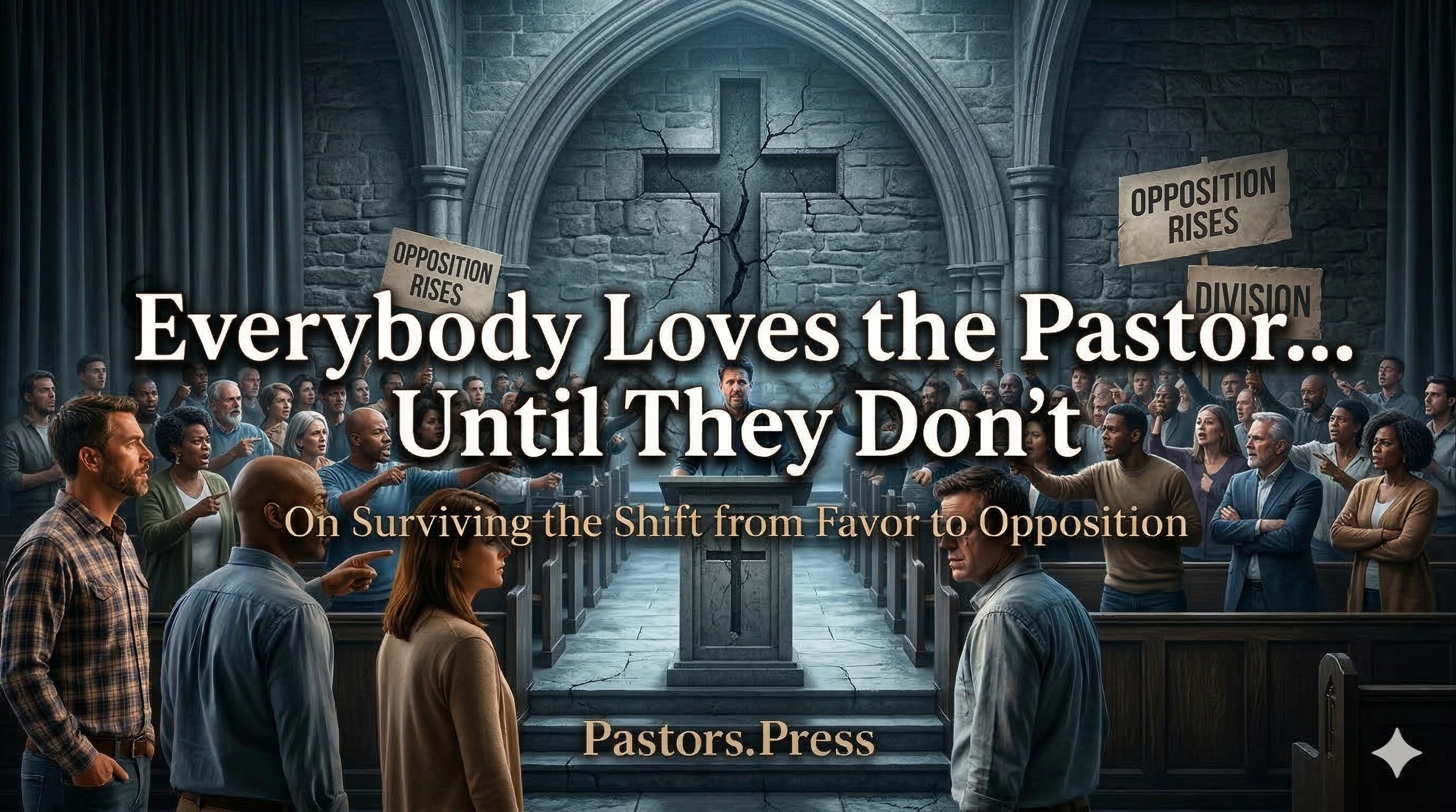
It may happen slowly — a coolness in the room you cannot quite name. It may happen suddenly — a meeting you weren’t invited to, a conversation you weren’t supposed to hear. Either way, the message is the same: the tide has turned. The people who once carried you on their shoulders are now questioning your leadership, your motives, or your fitness for the role. And you are left standing in the wreckage of your own expectations, wondering what happened.
If this is your story — or if you fear it becoming your story — you are in better company than you know.
From Gods to Criminals: Paul at Lystra
Few stories in the New Testament capture this whiplash more vividly than Paul’s experience in Lystra, recorded in Acts 14. When Paul healed a man lame from birth, the crowd’s response was immediate and overwhelming. They began calling Barnabas “Zeus” and Paul “Hermes.” The priest of Zeus prepared oxen and garlands for a sacrifice at the city gates. The people were ready to worship them.
Paul and Barnabas tore their garments in protest — a Jewish sign of horror — and pleaded with the crowd to turn from these vain things to the living God. And still, barely a chapter later, when Jews arrived from Antioch and Iconium, the crowd that had wanted to offer sacrifices to Paul stoned him and dragged him outside the city, supposing he was dead.
Same man. Same city. Completely different verdict.
This is not a story about Paul doing something wrong between verses 13 and 19. He preached the same gospel. He served the same Lord. The shift in the crowd’s response had nothing to do with a failure in his ministry and everything to do with the instability of human favor. The congregation that cheers loudest today is not immune to turning tomorrow. Paul knew this, and he got up, went back into the city, and continued on.
The Long Road from Hosanna to Crucify Him
The starkest example, of course, is Jesus himself.
On Palm Sunday, the crowds spread cloaks on the road. They waved branches. They shouted Hosanna — a word that means “save us now.” The whole city was stirred. The religious leaders, watching from the margins, said to one another in frustration, “Look, the world has gone after him” (John 12:19).
Five days later, those same streets echoed with a different word: Crucify him.
Now, we understand that not every person in the Palm Sunday crowd was in the Praetorium crowd. The dynamics were complex. But the point stands: public acclaim is not a promise. The warmth of a congregation — the applause, the appreciation, the affirmation — is real and meaningful, but it is not a covenant. It is not a guarantee of tomorrow’s loyalty. And if the Son of God was not exempt from this experience, neither are you.
What strikes us about Jesus in those final days is not that he was surprised by the betrayal. He wasn’t. He had told his disciples plainly what was coming. What strikes us is that he did not adjust his mission based on the crowd’s temperature. He wept over Jerusalem. He washed feet. He prayed in the garden. He kept going — not because the people were faithful, but because the Father was.
What to Do When the Wind Changes
So what do you do when you find yourself in that disorienting space between Hosanna and opposition?
First, resist the urge to perform your way back into favor. The temptation, when pastoral support erodes, is to work harder, preach more carefully, and manage every relationship with surgical precision. But a ministry built on earning the crowd’s approval is exhausting, and it cannot hold. You were not called to be liked. You were called to be faithful.
Second, examine your heart without condemning it. When the congregation turns critical, it is worth asking whether there is anything legitimate in the feedback. Sometimes there is. Leaders grow through honest correction. But not every wave of opposition carries a lesson — sometimes it is simply the unpredictable nature of people under pressure, in transition, or listening to the wrong voices. Discern carefully. Do not dismiss criticism too quickly, but do not be destroyed by it either.
Third, find your footing in what does not change. Paul got up from the stones at Lystra and went back into the city. That is not the response of a man whose identity was anchored in the crowd’s opinion. It is the response of a man who knew his calling came from somewhere else entirely. Jesus set his face toward Jerusalem not because the crowds were with him, but because the Father was. The ground beneath your ministry is not congregational consensus — it is the God who called you, who has not changed his mind about you, and who is not surprised by any of this.
Fourth, let this season deepen your compassion. It is easy to become bitter when the people you have served turn critical. It is harder — and more Christlike — to remain soft toward them. The same Lord who wept over the city that would reject him is the Lord who lives in you. Let opposition do the work only opposition can do: stripping away whatever in you was ministering for applause, and leaving behind the minister who serves simply because it is his calling.
A Word Before You Walk Away
If you are in the middle of this right now — if the warmth has gone cold and you are questioning everything — please hear this: the shift from favor to opposition does not mean you missed God. It may mean you are right in the middle of his plan.
The road to the resurrection ran straight through opposition.
Stay. Pray. Keep preaching. The God who called you has not moved. And the work he is doing in you through this season may be the most important work of your entire ministry.
The crowd’s opinion is a poor compass. The calling of God is not.
Pastoring Tip:
Keep a private record of the encouragements God has given you in ministry — notes people have written, moments of breakthrough, answered prayers. Not as a trophy case, but as an anchor. When the wind shifts and opposition comes, those reminders will help you distinguish between a difficult season and a closed door. David encouraged himself in the Lord (1 Samuel 30:6). You need tools to do the same.
Prayer Thought:
Father, you know the weight of walking through seasons when the people we serve turn cold or critical. Guard our hearts from bitterness and our minds from despair. Remind us that our calling comes from you — not from the congregation’s approval — and that you have not changed your mind about us. Give us the grace to stay, to serve, and to love the people in front of us even when it is hard. And when we are tempted to walk away, turn our eyes to Jesus, who set his face toward Jerusalem and did not waver. May we do the same. In his name, Amen.
Looking for Preaching Ideas to Help You Communicate the Gospel?
CLICK HERE —>: 500 Three-Point Alliterated Sermon Outlines

Barry, I know you’ve been there… because you describe the “scenery” so well! Been there twice… the hardest season of ministry to endure. But stronger and more compassionate for it… Blessings!