


Key Verse:
“Remember Jesus Christ, raised from the dead, descended from David. This is my gospel, for which I am suffering even to the point of being chained like a criminal. But God’s word is not chained.” —2 Timothy 2:8–9
The Strength of Leadership in Chains
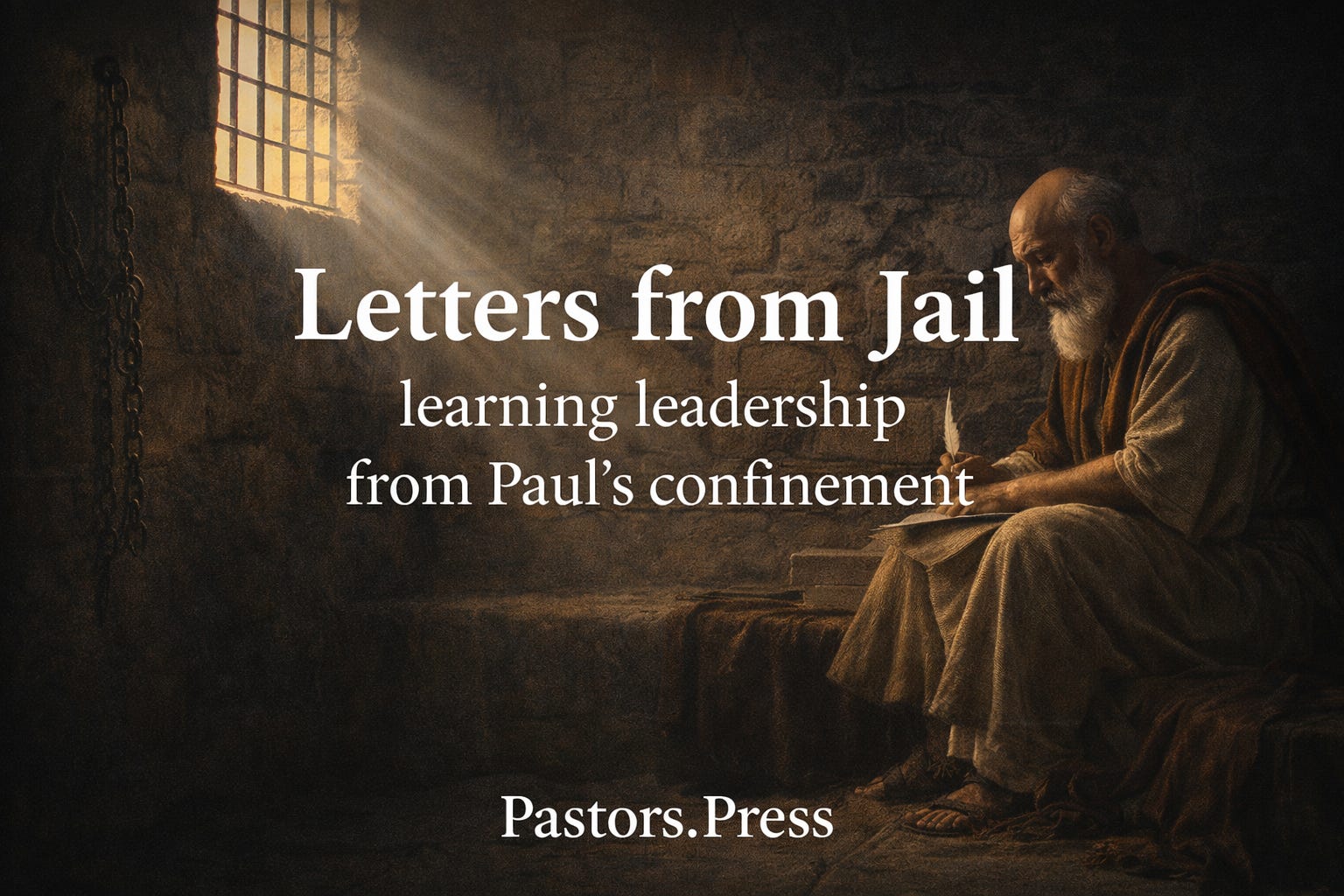
Few images challenge our modern understanding of leadership more than the apostle Paul writing from a prison cell. We associate leadership with platforms, visibility, influence, and mobility. Paul led from confinement. We equate effectiveness with freedom; he ministered in chains.
Some of his most powerful theological reflections—Ephesians, Philippians, Colossians, Philemon, and later 2 Timothy—were penned while under guard. His circumstances were restricted, but his calling was not. His body was bound, but his voice was not silenced. His ministry did not shrink in confinement—it deepened.
For pastors and leaders, Paul’s prison letters offer a profound reminder: leadership is not dependent on ideal conditions. It is rooted in conviction, clarity, and Christ-centered courage.
What Paul’s Confinement Teaches Us About Leadership
1. Leadership Is Rooted in Calling, Not Circumstance
Paul never interpreted imprisonment as a detour from God’s will. Instead, he viewed it as an assignment. In Philippians, he wrote that his chains had actually advanced the gospel. What others saw as limitation, he saw as opportunity.
Pastors often wait for better seasons—more time, fewer challenges, fewer critics, greater resources. But leadership is not postponed until circumstances improve. It is exercised wherever God places you.
The measure of your leadership is not how free you feel but how faithful you remain.
2. Influence Flows from Integrity, Not Proximity
Paul could not visit churches personally, yet his words shaped generations. Distance did not diminish his influence because credibility had already been established. The churches knew his character. They trusted his heart.
Leadership is sustained by integrity. When your life matches your message, your influence extends beyond your presence. A pastor may not be physically everywhere, but consistency of character speaks across every barrier.
Paul’s letters carried weight because his life carried authenticity.
3. Joy Is a Decision, Not a Condition
It is striking that Philippians—often called the epistle of joy—was written from prison. Joy was not tied to Paul’s comfort; it was anchored in Christ.
For pastors, discouragement often comes not from failure but from fatigue. Ministry challenges, criticism, and seasons of isolation can weigh heavily. Yet Paul demonstrates that joy is a theological conviction, not an emotional accident.
When your identity is rooted in Christ rather than in applause, joy becomes resilient—even behind bars.
4. Leadership Multiplies Through Investment
Even in confinement, Paul invested in others. He mentored Timothy. He encouraged Epaphroditus. He strengthened churches from afar. His chains did not cause him to turn inward; they compelled him to pour outward.
True leadership is measured by multiplication. It is not about protecting position but about developing people. Paul understood that the gospel would outlive him, and so he invested intentionally in those who would carry it forward.
A confined leader can still be a multiplying leader.
When Your Ministry Feels Restricted
Most pastors will not write from literal prison cells, but many know seasons of confinement—illness, limited budgets, small congregations, criticism, cultural hostility, or personal discouragement.
In those moments, Paul’s example speaks clearly:
Your assignment has not been canceled.
Your influence has not been erased.
Your calling has not expired.
God often does His deepest work in seasons where our external activity is reduced but our internal reliance is increased.
The Word of God is not chained. And neither is your obedience.
Leadership That Endures
Paul’s prison letters continue to guide churches two thousand years later. Platforms fade. Buildings crumble. Cultural trends shift. But leadership anchored in Christ and forged in hardship leaves a legacy that outlives the leader.
Leadership learned in comfort may inspire. Leadership learned in confinement transforms.
Paul’s chains did not silence him—they sharpened him. And in his weakness, the power of Christ became unmistakably strong.
Prayer Thought
Lord, when my ministry feels restricted, help me to remain faithful. Guard my joy. Deepen my conviction. Teach me to lead with integrity and courage, whether in seasons of freedom or confinement. May my influence flow not from circumstance but from Christ. Use even my limitations for Your glory. Amen.
Pastoring Tip
Do not measure your effectiveness by visibility or ease. Some of the most enduring leadership lessons are learned in seasons of limitation. Stay faithful where you are. Invest in people. Write, teach, mentor, pray. God often multiplies influence in the very moments we feel most confined.
And if you are looking to strengthen your leadership with biblically grounded encouragement and practical pastoral insight, you may find helpful resources in the Pastor’s Bookstore —designed to equip shepherds for faithful ministry in every season.